
Understanding IVF Success Rates
For couples considering In-Vitro Fertilisation (IVF) treatment, the success rate of a fertility clinic is often an important factor when making decisions. However, it is important to understand that IVF outcomes can vary between individuals.
Success rates may be influenced by several factors, including:
- Maternal age
- Underlying causes of infertility
- Egg and sperm quality
- Embryo development
- Reproductive and medical history
- Lifestyle and overall health factors
Our Pregnancy Outcomes
Advances in Assisted Reproductive Technologies (ART) have improved many aspects of fertility treatment, including embryo development and laboratory techniques.
At Alpha IVF Singapore, patients have access to established IVF treatment protocols and laboratory processes used in assisted reproduction.
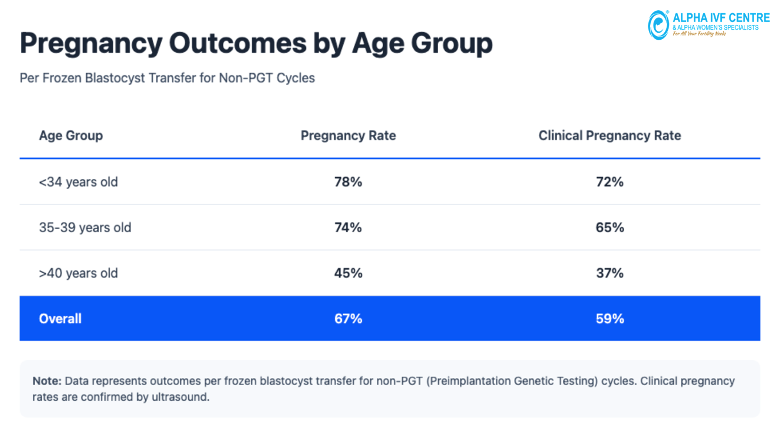
Based on our data up to 2025, the clinic reported the following outcomes as shown in the table below:
- Overall Clinical Pregnancy Rate: 59%
- Overall Pregnancy Rate: 67%
These figures are reported per frozen blastocyst transfer for non-PGT cycles.
A clinical pregnancy refers to a pregnancy confirmed by ultrasound with the presence of a gestational sac, while a pregnancy rate generally refers to pregnancies confirmed through a positive pregnancy test following embryo transfer.
Laboratory Metrics That Matter
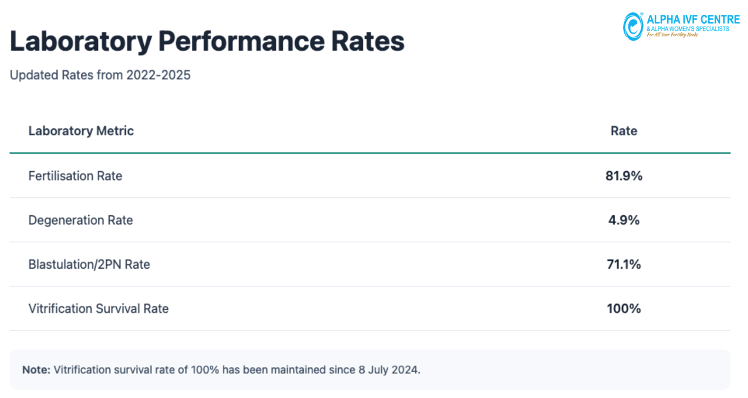
Besides pregnancy rates and clinical pregnancy rates, IVF laboratories also monitor several laboratory performance indicators that help doctors understand how eggs, sperm, and embryos develop during the IVF process.
Fertilisation Rate: The percentage of mature eggs that are successfully fertilised by sperm in the laboratory and begin developing into embryos. This helps indicate how well the egg and sperm interact during the fertilisation stage.
Degeneration Rate: The percentage of eggs or embryos that do not survive or become non-viable during laboratory handling or culture.
Blastulation Rate: The percentage of fertilised embryos that successfully develop into a blastocyst, which is a more advanced stage of embryo development typically reached around day 5. Blastocysts are commonly the stage selected for embryo transfer or freezing.
Vitrification Survival Rate: The percentage of eggs or embryos that remain viable after being frozen and later thawed using a rapid freezing technique called vitrification. A higher survival rate indicates that embryos remain structurally intact and suitable for transfer after thawing.
Every IVF Journey is Unique
Behind every number is a different fertility journey. While laboratory indicators and the IVF success rates of a fertility clinic in Singapore provide useful reference points, fertility assessment and personalised consultation with a fertility specialist can help individuals better understand their fertility health and explore available fertility treatment options when planning for their family.
