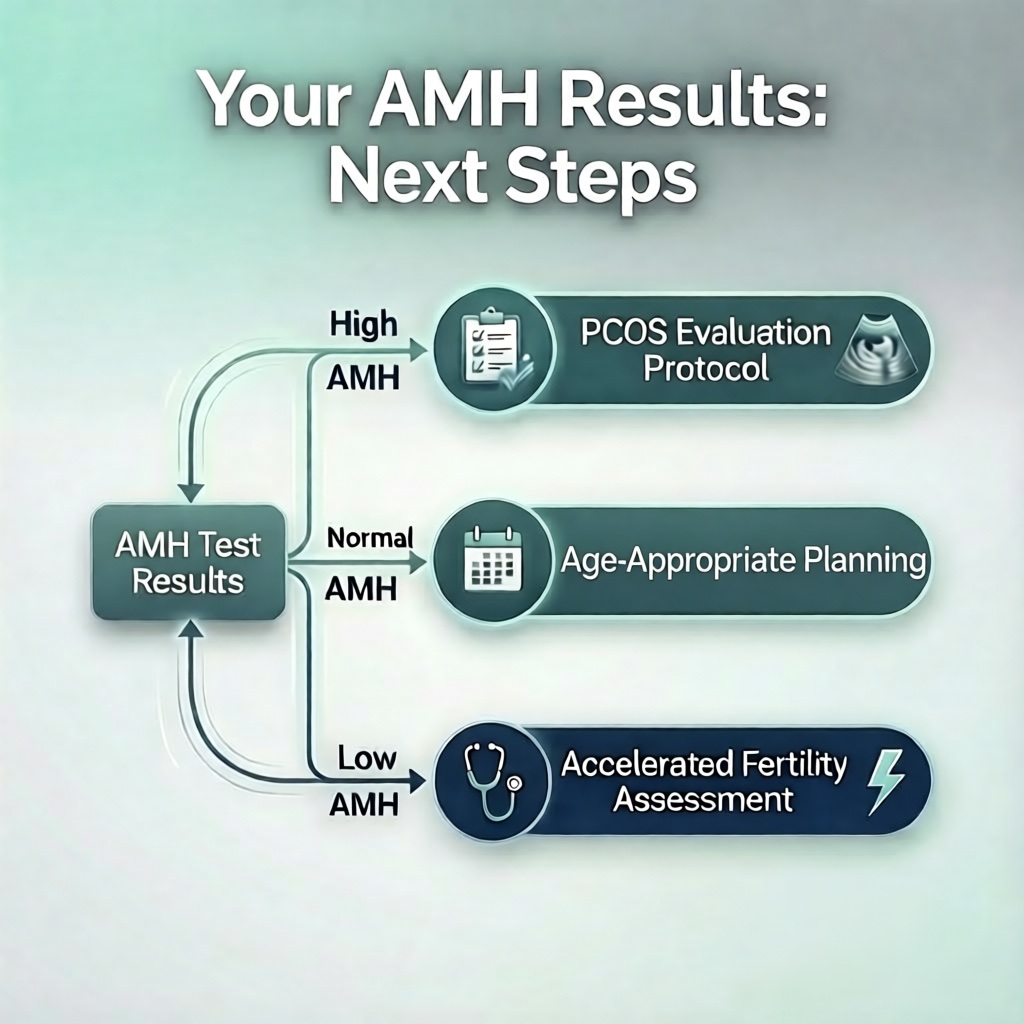
If you’re exploring fertility treatments in Singapore, you may have come across the term “AMH test” or “ovarian reserve test.” This is a simple blood test that is often done as part of a fertility assessment. However, the result of your Anti-Müllerian Hormone (AMH) test can be confusing if you are not sure what it means. A lower AMH can sound worrying, while a higher number may feel reassuring, but AMH is only one part of your overall fertility picture in reality.
So, what is Anti-Müllerian Hormone (AMH) and what does it represent?
AMH is produced by small developing follicles in the ovaries. In simple terms, AMH reflects the number of remaining eggs, rather than egg quality.
Some key points to know about AMH include:-
- AMH levels generally decline with age
- The test can be done on any day of the menstrual cycle
- AMH can help doctors estimate how the ovaries may respond to stimulation during IVF
- AMH levels are influenced by genetics and may remain relatively stable over short periods
Interpreting Your AMH Result
In Singapore, AMH is commonly reported in ng/mL or pmol/L. Broadly speaking, higher AMH levels are sometimes seen in women with polycystic ovary syndrome (PCOS) and may be associated with a stronger ovarian response to stimulation, while lower AMH levels may suggest reduced ovarian reserve and may affect how treatment is planned.
However, these values should not be interpreted on their own. The same AMH level can have very different implications depending on your age. For example, a lower AMH in a younger woman may prompt further assessment and earlier discussion of options, while a similar value in an older woman may be expected as part of natural reproductive ageing.
Age remains an important factor in fertility, particularly in relation to egg quality, while AMH mainly reflects egg quantity. This is why two women with the same AMH level, but different ages may have different fertility considerations.
What AMH Can and Cannot Tell You
AMH can help to:-
- Estimate likely ovarian response to IVF medication
- Guide treatment planning and medication dosing
- Assess the risk of ovarian hyperstimulation in some patients
- Support evaluation for conditions such as PCOS
AMH cannot predict :-
- Natural conception potential
- Egg quality
- Pregnancy or live birth outcomes
- The exact timing of menopause
AMH is therefore best viewed as a guide rather than a prediction of outcomes.
How AMH Is Used in IVF Care
In IVF planning, AMH is used to support personalised care. It helps doctors tailor stimulation protocols and counsel patients on expected ovarian response. Women with higher AMH levels may require gentler stimulation to reduce the risk of ovarian hyperstimulation, while women with lower AMH levels may need individualised protocols to optimise response. AMH may also be considered alongside age and life plans when discussing fertility preservation options such as egg freezing, although the decision is always individual and based on a broader clinical assessment.
AMH Testing in Singapore
AMH testing is usually done as part of a fertility assessment at licensed fertility clinics in Singapore. While the test itself is straightforward, the interpretation of results should always consider:-
- Age
- Antral follicle count (AFC) on ultrasound
- Hormonal profile
- Medical history
- Individual fertility goals
Beyond the Number
Your AMH result does not define your fertility potential or determine your future. It is one piece of information that can support informed discussions about your reproductive health and possible options moving forward. A personalised assessment that considers your overall health, age, ultrasound findings and treatment goals provide a more meaningful foundation for fertility planning than any single blood test result.