
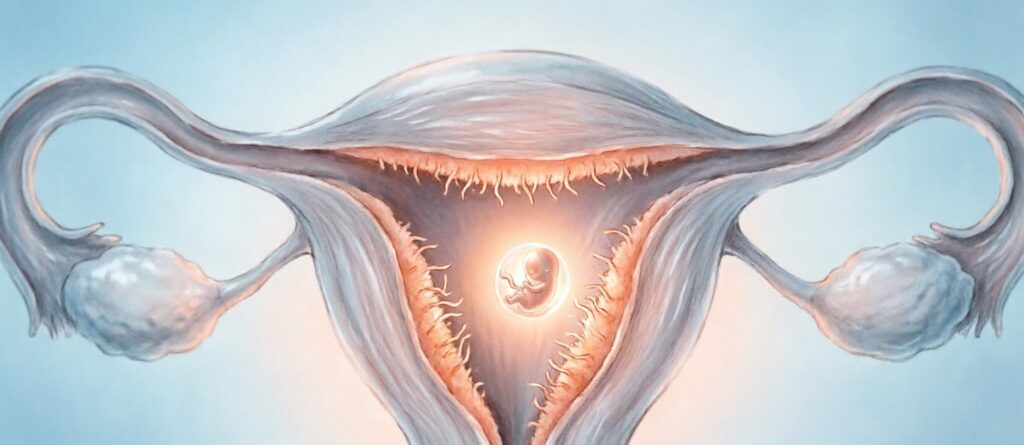
Experiencing repeated unsuccessful embryo transfers can be emotionally challenging, especially when everything appears to have progressed well during treatment.
When this occurs multiple times, it may be described as recurrent implantation failure (RIF).
In clinical practice, RIF is often considered after several embryo transfers without a successful pregnancy, particularly when good-quality embryos have been used.
In some cases, further evaluation may help identify underlying factors that are not detected during initial fertility testing.
This article explores possible reasons for implantation challenges and what additional assessments may be considered as part of IVF treatment in Singapore.
Why Might Embryos Not Implant?
Implantation is a complex process involving both the embryo and the uterine environment.
For pregnancy to occur, several factors need to align:
- Potential of embryo development
- Uterine lining receptivity
- Timing of embryo transfer
- Overall reproductive environment
In some cases, standard fertility investigations may not fully identify subtle contributing factors.
Broadly, these may include:
| Category | Description |
|---|---|
| Embryo-related | Developmental factors not visible during routine assessment |
| Uterine-related | Conditions affecting the uterine lining or structure |
| Timing-related | Variation in individual implantation window |
| Inflammatory-related | Factors affecting the uterine environment |
Further Evaluation That May Be Considered
In selected cases, doctors may recommend additional testing to better understand possible causes of recurrent implantation challenges.
One area that may be explored is the timing of the uterine lining’s receptivity, sometimes referred to as the “window of implantation”. While there is a general timeframe when implantation is most likely to occur, some individuals may have slight variations in this window. If embryo transfer does not align with this timing, implantation may be affected.
In such cases, tests such as the Endometrial Receptivity Analysis (ERA) may be considered to evaluate the timing more precisely.
The process typically involves:
- Collecting a small sample of the uterine lining
- Analysing the sample to assess receptivity status
- Using the results to help guide the timing of a future embryo transfer, where appropriate
ERA is available in selected fertility centres in Singapore and may be recommended based on individual clinical assessment.
Other Evaluations That May Be Recommended
Depending on your individual history, your doctor may also suggest:
Uterine assessment:
- Hysteroscopy (to examine the uterine cavity)
- Ultrasound imaging
Male factor evaluation:
- Sperm DNA fragmentation test (to assess sperm DNA quality)
General medical evaluation:
- Hormonal assessment
- Selected blood tests where clinically indicated
What Happens After Testing?
If any contributing factors are identified, your fertility specialist may recommend a personalised approach, which may include:
- Adjusting embryo transfer timing
- Managing uterine conditions
- Addressing inflammation or microbiome balance
- Optimising overall reproductive health
In some cases, more than one factor may be involved, and treatment plans are tailored accordingly.
When Might You Consider Further Evaluation?
You may wish to discuss additional testing with your doctor if you have experienced:
- Multiple unsuccessful IVF embryo transfers
- Transfer of good-quality embryos without implantation
- Recurrent pregnancy loss
- Ongoing unexplained fertility challenges
A discussion with a fertility specialist can help determine whether further evaluation is appropriate for your situation.
Key Takeaways
Recurrent implantation failure can be complex and may involve multiple contributing factors.
While standard fertility tests provide important information, additional advanced technology may sometimes offer further insights, particularly after repeated IVF attempts.
A personalised approach guided by a qualified fertility specialist can help determine suitable next steps based on individual circumstances.






Leave a Reply
You must be logged in to post a comment.