
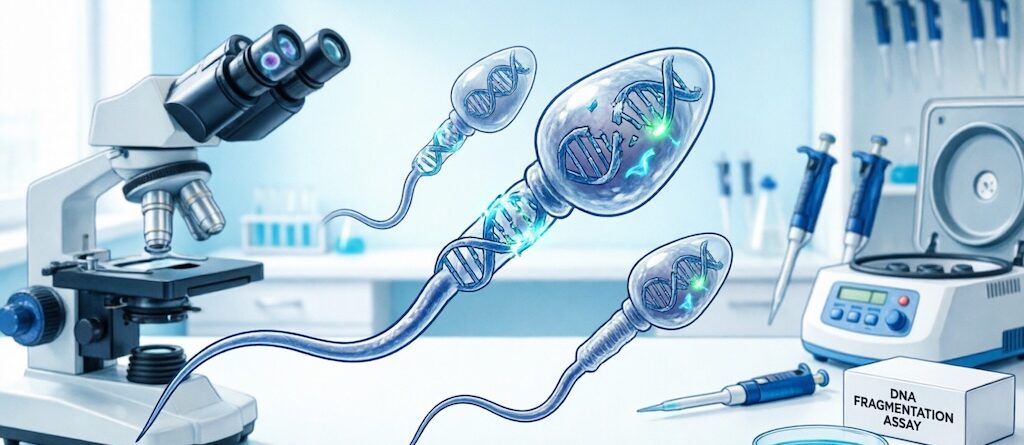
When couples are trying to conceive, a semen analysis is often one of the first tests recommended to male partner. It looks at sperm count, movement (motility), and shape (morphology) to assess male fertility.
While this test provides useful information, it may not reflect all aspects of sperm health. In some cases, couples may be advised to explore additional testing, such as a sperm DNA fragmentation test, especially when the cause of infertility is unclear.
This article explains what sperm DNA fragmentation is, why it may matter, and when it might be considered as part of a male fertility assessment in Singapore.
What is Sperm DNA Fragmentation?
Sperm contains genetic material (DNA) that plays a role in fertilisation and embryo development.
A simple way to understand this is to think of sperm in two parts:
- The outer structure (which can be assessed in a semen analysis)
- The internal genetic material (DNA), which is not visible under standard testing
Sperm DNA fragmentation refers to damage or breaks in the DNA within the sperm. In some cases, sperm may appear normal in a semen analysis but still have underlying DNA damage.
In simple terms:
- Semen Analysis → looks at sperm count, movement, and shape
- DNA Fragmentation Test → looks at the genetic quality of sperm
Why Sperm DNA Quality May Matter?
Research suggests that higher levels of sperm DNA fragmentation may be associated with certain fertility challenges.
For natural conception:
- Fertilisation may still occur
- However, embryo development may be affected in some cases
For fertility treatments such as IUI, IVF or ICSI:
- Sperm DNA quality may play a role in fertilisation and embryo development
- Some studies suggest possible associations with:
- Embryo quality
- Implantation outcomes
- Early pregnancy outcomes
What May Contribute to Sperm DNA Fragmentation?
Several factors have been associated with increased sperm DNA fragmentation:
Lifestyle factors:
- Smoking or vaping
- Frequent alcohol consumption
- Poor diet (low in antioxidants)
- Prolonged heat exposure (e.g. hot baths, laptops on lap, tight clothing)
Medical factors:
- Varicocele (enlarged veins in the scrotum)
- Infections
- Recent high fever
- Hormonal imbalances
- Increasing age
General health factors:
- Chronic stress
- Sedentary lifestyle
Who May Consider a Sperm DNA Fragmentation Test?
Not all couples require this test. However, it may be considered after discussion with a doctor in situations such as:
Trying to conceive naturally:
- Difficulty conceiving despite normal initial test results
- History of recurrent miscarriage
- Repeated early pregnancy loss
Undergoing fertility treatments:
- Multiple unsuccessful IUI cycles
- Unexpected fertilisation outcomes during IVF/ICSI
- Poor embryo development
- Repeated implantation challenges
Men with certain risk factors:
- Known varicocele
- History of medical treatments affecting fertility
- Age above 40–45
- Lifestyle risk factors (e.g. smoking)
How is the Test Performed?
The sperm DNA fragmentation test is similar to a standard semen analysis:
- A semen sample is collected
- The sample is analysed in a specialised laboratory
- Results are typically available within 1–2 weeks
- A doctor will interpret the results in the context of your overall fertility assessment
Understanding the Results
Results are usually reported as a percentage of DNA fragmentation:
| Fragmentation Level | General Interpretation |
|---|---|
| <15% | Low level |
| 15–25% | Within acceptable range |
| 25–35% | Moderately elevated |
| >35% | Higher level |
Key Takeaways
A semen analysis is an important first step in evaluating male fertility. However, it may not capture all aspects of sperm health. In selected cases, a sperm DNA fragmentation test may provide additional insights into sperm quality and help guide further evaluation or treatment options.









Leave a Reply
You must be logged in to post a comment.